- Tūhono home Hoki ki Tūhono
-
- Staff Directory
- Chief Executive Office Chief Executive Office Finance People and Safety People, Culture and Wellbeing Wellbeing and Safety Operations Academic Registry Campus Environment Digital Functions and Catering International Marketing, Communications and Engagement Polykids
- Learner Experience and Partnerships Learner Services Tiriti and Partnerships Pasifika Te Pā Tauira Te Punaka Ōwheo Industry Training and Innovation Central Otago Campus College of Engineering, Construction and Living Sciences Te Maru Pumanawa | College of Creative Practice and Enterprise Academic Delivery Academic Excellence Research and Postgraduate Studies College of Community Development and Personal Wellbeing College of Health Te Ama Ako | Learning and Teaching Development
- Auckland Staff Directory Executive Office Academic Marketing and Business Development Human Resources Campus Quality and Programme Development
-
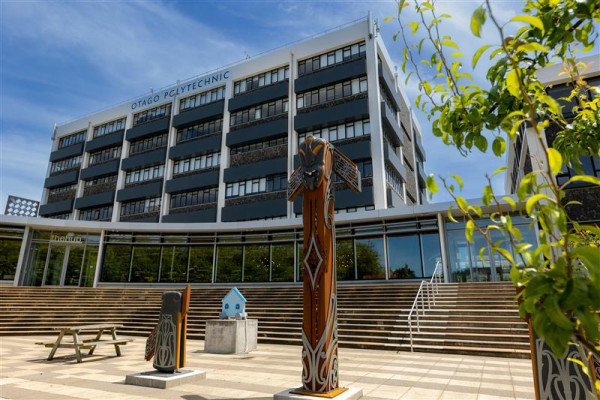 Our people make a better world
We build the capabilities of individuals, organisations and communities and help them to realise their potential.
Staff Directory
-
- Tools
- Academic Integrity Declaration Form AIC applications dashboard AI support for ākonga Approved programmes Approved programme fees Centralised assessement repository Chemwatch Course evaluation and surveys CMS CRM applications CRM Communication Guide CRM customer service hub DataHub Delegations policy/process Disability and neurodiversity Dynamics 365 (CRM) EBS Ontrack EBS Report Email security personal portal Employment Matters @ OP eTaxi eTV
- FCM travel intranet Financial variance reporting Gift, Koha and Hospitality Register Hidden Disabilities Sunflower programme Image Library InPlace International entry requirements Knowledgebase articles Learner support dashboards Linkedin Learning Login as an applicant Marketing support Media consent form Microsoft 365 Moderation App Moodle Nurture Guide and templates OP Docs OP Docs - Publishing Performance Excellence Portal Performance Review system Pocket Lab (student healthcare) Product Evaluation Panel
- Policy Library Privacy Programme and course design/development Qualtrics XM RDS Remote access support portal Research Database Robertson Library Staff FAQs about graduation Status of Programmes Student intranet (Kāpehu) Study Abroad info for learners Taha Talks (videos for students) Tūhauora I Wellbeing resources Uniprint Vault Webexpenses Auckland tools
-
 Vault
Had an accident or near miss?
Log it here
Vault
Had an accident or near miss?
Log it here
-
- Communities
- Community AI Steering Committee Ally Network EBS Community of Interest EdTech Champions Health & Wellbeing Research Internal Evaluation Neurodiversity Professional Team Professoriate Proud@OP Student Support Website Advisory Group Web Champions Working under the Rainbow Project Trade Training Centre
- Committee Academic Committee Animals@OP Diversity and Equity Doctor of Professional Practice Committee Kaunihera Whakahaere - Leadership Council Internal Evaluation Learning & Teaching Leadership Team Library Committee Mental Health and Wellbeing Advisory Group Otago Polytechnic Board of Directors Pastoral Care Code Committee Policies Committee Programme Approvals Committee Research and Postgraduate Committee Research Ethics Committee Staff Subcommittee
- Pou Think Tanks Mātauraka Our learners achieve educational success Pūtea Our financial success Tākata Our people, our team, our community Tiriti Our active commitment as a Treaty partner Tūroa Our commitment to be a sustainable and responsive organisation Unions TEU TIASA
-
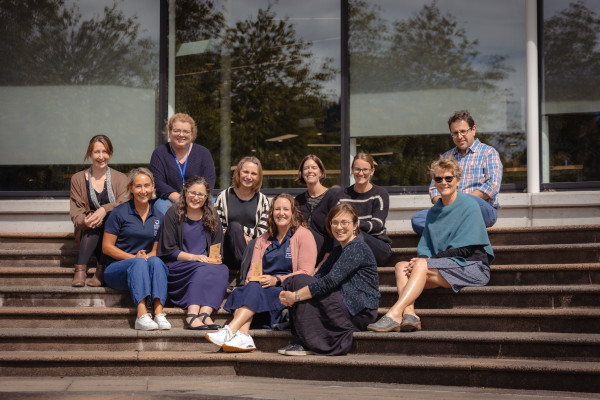 Create a community
Do you have a community, committee or project that you'd like represented here?
Communities
-
- About OP
- Keep up to date All news All events All notices All blogs Share your info Create a news article Create an event Create a notice Create a blog
- Community and Partnerships Alumni and friends Education Foundation Operational information Academic calendar 2026 Academic calendar 2027 Current vacancies Dunedin Campus map Official Information Act request Our policies Privacy request
- Who we are About Te Kāhui Manukura (TKM) Commemorative sites Leadership structure Māori Strategic Framework OP merchandise Our Council Our history Our strategic priorities Pasifika Action Plan Pasifika Strategic Framework (2025-2030) Vision and values Working for us OP job opportunities Wellbeing calendar Working at OP
-
New Zealand: 0800 762 786
Contact us
International: +64 3 477 3014
Constructive Critical Conversations: An Approach Toward Quality
Author: Marcia Johnson
Supervisors: Glenys Ker Martin Andrew
28 May 2026
Johnson, M. (2026). Constructive Critical Conversations: An approach toward quality [Doctoral thesis, Otago Polytechnic]. Research Bank. https://doi.org/10.34074/thes.7311
Abstract
This study investigates the essence of the concept of Constructive Critical Conversations (CCC). The word ‘critical’ differentiates the concept from the HR term ‘constructive conversations’ in that it focuses on critical thinking brought into a collaborative moment to improve quality outcomes. The concept of CCC includes all levels of reflective criticality.
Two research questions were posed:
• How relevant are constructive critical conversations to professional development for individuals?
• How and why are constructive critical conversations relevant to quality outcomes in organisations?
While much research exists regarding systems and distinct aspects of quality in isolation, there is a gap in literature regarding the individuals who take practical action within a system, how their understanding develops, and what impact that has on organisational outcomes. The gap reinforces a need to investigate Constructive Critical Conversations (CCC) to contribute to a wider understanding of quality improvement. Individual professional practices in education have the potential to impact many organisations over the span of a career, including the practices of other professionals, and an untold number of learners.
My experiences, observations, and reflective practice in New Zealand academic roles over the past 30 years underpin this investigation into the human aspect of education quality systems. In my experience, quality in education environments is often approached through compliance-driven processes and can fall short of achieving deeper quality outcomes that emerge through learning-oriented approaches. This study positions CCC as a mechanism that can enable a shift toward learning-based improvement. However, the potential of CCC can only be realised if the concept is more clearly understood and articulated - a contribution this study provides.
This Doctor of Professional Practice (DProfPrac) research utilises a mix of autoethnography and organisational inquiry by combining my experiences with the narratives of 16 other ‘quality practitioners’ - individuals who are responsible and accountable within a quality system to ensure compliance or improvement of quality outcomes within a context, such as tertiary education.
Iterative qualitative descriptive analysis reveals key findings of the essence of CCC as intentionality, criticality, and co-construction.
This project contributes a learning approach to the individual’s self-directed professional development in the workplace and therefore a learning approach to the organisation’s continual quality improvement.
The research defines and theorises the construct of CCC, revealing three principles which organisations can use to improve quality outcomes and providing a practical tool for quality practitioners to use in the workplace.
The strength of a CCC approach to quality lies in the endless potential for experiential learning. As individuals learn, change, and adapt, they become prepared for future challenges. Organisations benefit from individuals' continuously expanding skills and the wider community of practice achieves an enhanced ability to navigate an ever-changing environment through continual improvement.
Keywords
tertiary education quality, quality enhancement, workplace development, learning approach, co-construction, constructive critical conversations
Licence
A copy of the thesis is publicly available under a Creative Commons Attribution Non-Commercial No Derivatives licence CC BY-NC-ND 4.0 International license. This licence applies except where otherwise indicated, especially for images.
